

When dealing with a faulty airbag ECU, resetting or replacing the unit can improve your repair job’s efficiency (and cost). While replacement may seem like the go-to fix, a proper ECU reset can restore safety functions without the price tag of a new module. Knowing when each approach is more innovative, safer, and more cost-effective is key. Let’s break down the differences so you can make the right call for your next repair.
Need help with your airbag ECU? Contact us for expert auto computer repair.
Table of Contents
- Understanding the Airbag ECU
- Airbag ECU Reset: What It Involves
- Airbag ECU Replacement: When It’s Necessary
- Key Differences Between Resetting and Replacing
- How to Decide: Reset or Replace?
- Making the Right Choice for Airbag ECU Repairs
- FAQs
Understanding the Airbag ECU
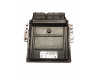
The airbag control unit is the heart of the vehicle’s restraint system. Often mounted beneath the center console or under the seat, it continuously monitors sensor input and controls airbag deployment during a collision. Inside the sealed housing, the ECU contains a network of critical systems that process data in real time to protect passengers during impact.
A faulty ECU can prevent deployment or keep the airbag light on. Understanding how it works and why it fails helps you choose the correct repair.
What Is an Airbag ECU?
The ECU is a compact module that processes signals from multiple acceleration sensors. When a crash is detected, it decides within milliseconds whether to deploy airbags based on data input, seat occupancy, belt tension, and power availability.
Key Components Located Inside the Airbag ECU
Inside the ECU, you’ll find more than just a circuit board. It contains:
- Microcontroller: Processes input data and executes crash algorithms
- Acceleration sensors: Mounted within the module and throughout the vehicle, these measure force from different angles
- Reserve/backup capacitors: Provide immediate energy to trigger airbag deployment
- Power supply circuit: Maintains constant voltage and stores backup power in case of battery disconnection
- EEPROM memory: Stores crash data, fault codes, and SRS history
These internal systems are shielded and connected to exterior wiring looms that lead to seat sensors, front and side crash sensors, and the airbag modules themselves.
Symptoms of a Faulty ECU
- Constant airbag warning light
- Stored fault codes that will not clear
- Airbags not deploying during an accident
- Loss of communication with diagnostic tools
If the internal power supply is damaged or crashes, data cannot be cleared, and the module may require a reset or full replacement.
Why the ECU Gets Damaged or Triggers Errors
- Impact from a previous collision that leaves crash data stored and triggers the warning light
- Electrical surges during battery replacement or jump starts that disrupt circuits or corrupt programming
- Moisture intrusion from compromised housing seals
- Heat and age lead to corrosion or worn solder joints, causing intermittent faults or loss of communication
Airbag ECU Reset: What It Involves
If the airbag ECU is still electronically intact, resetting it is often the smarter, faster, and more cost-effective alternative to full replacement. The process restores the airbag electronic module by clearing crash data, resetting internal fault codes, and reprogramming it to work as part of the occupant protection system again.
This service plays a critical role in maintaining a vehicle’s passive safety and restraint mechanisms, especially after a minor accident or unintended deployment. However, not all ECUs are repairable. If the unit has sustained electrical damage or board failure, you may still need a new ECU.
In some cases, especially when a replacement module is used, you will also need to reprogram your car’s engine control computer to ensure proper communication between the systems.
What a Reset Actually Does
- Removes crash history
- Restores factory settings
- Verifies internal components and communication with safety features like seatbelt pretensioners and passenger sensors
When Resetting Is a Viable Option
Resetting is appropriate when:
- The module was triggered in a crash but not physically damaged
- No signs of internal corrosion or electrical burn exist
- Communication with scan tools is still possible
- You want to avoid dealership replacement costs
It is not recommended if the casing is broken, moisture is present, or internal power circuits have failed. In those cases, replacing the ECU and possibly reprogramming the engine module will be required.
The Reset Process: Step-by-Step
- Remove the airbag ECU from the vehicle
- Bench test the unit for internal faults
- Erase crash data and fault codes from EEPROM
- Reprogram to original specifications
- Confirm communication with the vehicle’s restraint mechanisms
Reset vs Replacement Comparison Table
| Feature | Airbag ECU Reset | ECU Replacement |
| Cost | Low | High |
| Time to Complete | 24 to 48 hours | 3 to 5 days (with calibration) |
| Risk of Compatibility Issues | None with original unit | Possible, especially with used units |
| Programming Required | Usually not needed after reset | Sometimes required, not usually |
Resetting preserves original safety features and minimizes compatibility risk compared with replacement.
Airbag ECU Replacement: When It’s Necessary
Replacement is the only safe and effective solution when the ECU is physically damaged, flooded, or has suffered electrical failure. A reset will not restore function in these cases. Most modern vehicles rely on the crash unit to make millisecond decisions in a collision. A compromised ECU can result in failed deployment, so replacement is critical for safety.
Signs That Replacement Is Required
- ECU cannot communicate with a scan tool
- Total loss of internal power
- Visible burns on the board or water damage
- Hard codes that cannot be cleared even after multiple reset attempts
While resetting the module works well when the board is intact, these hard faults signal that the internal architecture of the ECU has been compromised.
New vs Used Airbag Control Modules
Before installing a used airbag ECU, it is essential to verify that the unit is fully compatible with the vehicle’s systems. The table below outlines the key items you should check to avoid installation errors, communication faults, or system failure.
What to Check When Installing a Used Airbag ECU
| Check Item | Why It Matters |
| Part Number | Must match exactly to ensure hardware and firmware compatibility |
| Firmware Version | Prevents miscommunication with newer or older vehicle systems |
| Crash Data Status | Used unit must be cleared of any stored crash events |
| Vehicle Configuration | Donor and recipient vehicles should have the same restraint features |
| Module Lock/VIN Lock | Some ECUs are locked to the original VIN and require special tools |
| Supported Systems | Ensure the unit integrates with ABS, steering, and engine modules |
Tip: Always use professional diagnostic tools to verify compatibility before installation. A mismatch can trigger new faults or render the airbag control module inoperable.
Programming and Module Matching
Replacing the ECU often requires more than plug-and-play. Many control units communicate using encrypted or locked protocols. The new airbag ECU must be programmed to the vehicle’s VIN and calibrated to communicate with other modules, including the steering angle sensor, seat occupancy system, and, in some cases, the engine control module.
Add an external reference for credibility, such as the NHTSA airbag system guidance and OEM service manual for the specific make and model.
Key Differences Between Resetting and Replacing
Deciding between resetting and replacing an airbag ECU depends on the unit’s condition, the repair objective, and how it integrates with the vehicle’s safety technologies. Both processes involve advanced airbag control units that work with sensors to store a record of speed data, trigger airbags, and control the airbag control light.
Resetting the Airbag ECU
- Clears crash history and restores factory programming
- Maintains original hardware and sensor connections
- Confirms operation with diagnostic tools
When Replacement Is Necessary
- Required for persistent hard faults or non-communication issues
- Installs new or used hardware matched to the vehicle
- Requires VIN programming and integration with modules like ABS and the engine control module
Impact on the Airbag Control Light
- Resetting turns off the light after clearing faults and verifying system health
- Replacement turns off the light only after programming, calibration, and verification
How to Decide: Reset or Replace?
Choosing between an ECU reset and a full replacement requires considering the unit’s condition, the accident type, and its role in your essential car safety systems. A structured evaluation helps you make the safest, most cost-effective choice without overlooking critical diagnostics.
Step 1: Review the Accident Type
The severity of the collision plays a significant role in this decision. Minor impacts often trigger crash data storage, leaving the ECU’s hardware intact. In these cases, a reset is usually enough to restore full function. Severe crashes impacting the ECU area or widespread sensor activation may require replacement.
Step 2: Check Fault Memory and Ignition Circuits
A diagnostic scan should reveal if the fault memory can be cleared. If codes reappear immediately or the ignition circuits show no response, the hardware is likely damaged. These issues indicate replacement is the safer option.
Step 3: Review Maintenance Checklist
Before making the decision, run through a maintenance checklist that includes testing all additional data systems connected to the ECU, such as seatbelt pre-tensioners and side impact sensors. A reset is only viable if all connected systems are functional and communicate without errors.
Step 4: Confirm With Professional Tools
Using a professional ECU navigator or equivalent diagnostic device ensures you get accurate results. This verification step confirms whether resetting will restore the system or if replacement is required to maintain the vehicle’s essential car safety standards.
Quick Decision Guide
| Condition | Recommended Action |
| Minor accident type, no physical ECU damage | Reset |
| Hard fault memory codes that cannot be cleared | Replace |
| Ignition circuits unresponsive | Replace |
| Additional data systems pass all tests | Reset |
FAQs
Can you always reset an airbag ECU after a crash?
No. A reset is only viable when the board is intact, the unit communicates with diagnostic tools, and no moisture or power-circuit damage is present.
Do I need VIN programming after ECU replacement?
Yes in most modern vehicles. The replacement ECU often requires VIN programming and calibration to communicate with ABS, steering, SRS sensors, and sometimes the engine control module. Add an external reference to an OEM service manual for the vehicle platform.
How long does a reset take vs replacement?
Typical turnaround is 24–48 hours for a reset and 3–5 days for replacement with calibration.

Making the Right Choice for Airbag ECU Repairs
Whether you reset or replace an airbag ECU depends on the module’s condition, the nature of the damage, and the standards you uphold for essential car safety. Resetting is often faster and more affordable, making it ideal for minor crash events where the internal components remain intact. Replacement ensures a clean slate when the unit is beyond repair or presents risks to the vehicle’s restraint systems.
In every case, accurate diagnostics, attention to compatibility, and professional handling are key to restoring the integrity of your airbag control unit. The right choice not only fixes the fault but also ensures the safety features you and your customers depend on will perform when it matters most.Get your ECU serviced by the experts. Contact SOLO’s Repair Center today to schedule a professional reset or replacement and restore your airbag system’s reliability.