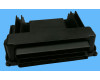


When your vehicle’s engine control module starts acting up, it can trigger a chain reaction of performance issues, from misfires to stalling. Testing ECM inputs and outputs is one of the most reliable ways to pinpoint whether your module is at fault or if another component is causing the issue.
At SOLO, our expert technicians specialize in ECM and PCM diagnostics, repair, and reprogramming for a wide range of makes and models. Here’s a clear guide to testing inputs and outputs the right way, and when it’s time to let professionals step in.
Visit our Repair Center to schedule your ECM diagnostic or PCM reprogramming service with SOLO’s certified repair center.
How ECM Inputs and Outputs Work
Your vehicle’s Engine Control Module (ECM) acts as the brain of the engine, managing hundreds of real-time calculations that keep performance smooth and efficient. It relies on two key systems, inputs from sensors and outputs to actuators, to make constant adjustments while you drive.
Inputs (Sensors): These provide the ECM with live data about the engine’s condition and environment. Signals from the throttle position, oxygen, crankshaft, and mass air flow sensors help determine how much fuel to inject and when to ignite the spark.
Outputs (Actuators): These are the components the ECM controls to make those adjustments happen. The ECM sends precise commands to fuel injectors, ignition coils, and the Ignition Switch, ensuring optimal ignition timing and combustion.
Common systems managed by ECM signals:
- Fuel delivery and injector pulse control
- Ignition and spark timing circuit board regulation
- Idle air and emissions system management
When either the inputs or outputs fail, the ECM’s ability to balance performance and efficiency drops quickly. Common symptoms include rough idling, stalling, poor fuel economy, or a no-start condition. In some cases, the ECM itself can malfunction, requiring ECM repair or a new Engine Control Module to restore full communication between sensors and actuators.
A professional diagnostic test will reveal whether the issue lies in the sensors, actuators, or the ECM’s internal circuitry. If your ECM isn’t sending or receiving signals correctly, it’s time to consider a full ECM repair or replacement to prevent deeper engine damage.
Understanding ECM Inputs and Outputs
The Engine Control Module (ECM), also called the Engine Control Unit or Engine Computer, manages every key aspect of engine operation. It constantly interprets sensor data from various components and adjusts performance through electronic commands to actuators. When either side of this communication fails, the result is poor drivability, fault codes, or total system failure.
Below is a breakdown of how inputs and outputs work together and what happens when they malfunction:
| Component Type | Example Parts | Function in Engine Operation | Common Issues / Fault Codes | Possible Symptoms |
| Inputs (Sensors) | Oxygen (O2) Sensor | Monitors exhaust gases to maintain correct fuel injection mixture | P0130–P0167 | Poor fuel economy, rough idle |
| Throttle Position Sensor (TPS) | Reports throttle angle for acceleration control | P0120–P0124 | Hesitation, weak throttle response | |
| Mass Air Flow (MAF) Sensor | Measures incoming air for correct air-fuel ratio | P0100–P0104 | Stalling, black smoke, loss of power | |
| Coolant Temperature Sensor | Tracks engine heat for proper ignition and timing adjustments | P0115–P0119 | Hard cold starts, erratic idle | |
| Crankshaft Position Sensor | Sends engine speed and position info for spark timing | P0335–P0339 | No start, misfire, inconsistent rpm | |
| Outputs (Actuators) | Fuel Injectors | Deliver precise amounts of fuel into the cylinders | P0200–P0204 | Hard start, misfire, lean or rich mix |
| Ignition Coils / Ignition Switch | Trigger spark timing and combustion events | P0350–P0362 | Misfiring, rough running, no spark | |
| Idle Air Control Valve | Adjusts airflow to maintain stable idle speed | P0505–P0507 | Fluctuating idle, stalling | |
| EGR Valve | Controls exhaust gas recirculation to reduce emissions | P0400–P0409 | Rough idle, high NOx emissions | |
| Transmission Solenoids | Manage gear shifts via ECM signal control | P0750–P0770 | Hard shifting, slipping, limp mode |
Key Takeaway:
When sensor data is inaccurate or an actuator fails, the Engine Control Unit compensates by generating fault codes and switching into a protective mode. Persistent check-engine lights, misfires, or loss of fuel injection timing often point to deeper ECM signal issues.
If your Engine Computer is no longer sending or interpreting signals correctly, professional testing or repair may be needed to restore smooth, efficient engine operation.
Tools You’ll Need for ECM Testing
Before diagnosing an Engine Control Module (ECM) or Powertrain Control Module (PCM) issue, having the right tools is essential. These instruments help measure voltage, read sensor activity, and identify system faults through the OBD-II port. However, if the OBD-II scanner fails to communicate with the ECM, it could indicate a deeper electrical issue, such as a blown fuse, grounding fault, or a malfunction within the module itself. Using the proper diagnostic equipment ensures accuracy and prevents damage to delicate circuitry while testing components like the oxygen sensor and other key inputs.
Essential Tools for ECM Testing:
- Digital multimeter and oscilloscope basics:
Used to measure voltage, resistance, and waveform signals from the ECM and sensors. A digital multimeter checks for continuity and power supply issues, while an oscilloscope visualizes live signal patterns from components such as the oxygen sensor or ignition coils to confirm correct operation. - OBD-II scanner recommendations:
An OBD-II scanner connects directly to the OBD-II port to retrieve diagnostic trouble codes and monitor live engine data. Professional-grade scanners allow you to view ECM communication, track sensor inputs, and verify if the Powertrain Control Module is sending accurate commands to the actuators. - Safety gear and grounding considerations:
Proper safety measures protect both you and the vehicle’s electronics. Use insulated gloves and grounded wrist straps to prevent static discharge, which can damage the ECM’s internal circuitry. Always disconnect the battery before testing sensitive connectors or probing the Engine Control Module harness.
With these tools and precautions, you can confidently test, record, and interpret ECM data without risking component damage or false readings.
Step-by-Step Guide to Testing ECM Inputs
1. Connect to Diagnostic Systems
Use an OBD-II scanner to connect to the vehicle’s diagnostic systems and retrieve any stored fault codes. These codes indicate which sensor inputs may be sending incorrect signals to the ECM. Reviewing live data streams can reveal inconsistencies in voltage, temperature, or air pressure readings that affect performance.
2. Inspect and Record Sensor Voltages
Use a digital multimeter to measure sensor voltage at the connector pins. Compare readings to manufacturer specifications. Consistent and correct voltage values confirm that the sensor is sending proper data to the ECM. Any irregular or fluctuating voltage indicates a wiring issue or a failing sensor that can impact overall engine performance.
3. Test Sensor Resistance and Signal Quality
Many digital ECUs rely on signal clarity for accurate timing and fuel calculations. Check sensor resistance and signal waveforms with a multimeter or oscilloscope. A weak or noisy signal can confuse the ECU Control Module, leading to problems like stalling, misfires, or poor throttle response.
4. Verify Ground and Reference Circuits
Grounding is vital for stable communication between sensors and control modules. Use your multimeter to confirm proper grounding and 5V reference signals. Poor ground continuity or short circuits can prevent the ECM from interpreting input data correctly, triggering unnecessary fault codes or erratic system behavior.
Step-by-Step Guide to Testing ECM Outputs
1. Monitor Output Signals with Diagnostic Equipment
Connect your scan tool or oscilloscope to observe live communication signals coming from the ECM. Check if commands are reaching the fuel injectors, relays, and ignition system components. Irregular or missing pulse signals may indicate internal circuit failure or software corruption in the control unit, requiring reprogramming the engine control computer.
2. Check Voltage and Current Flow to Actuators
Use a multimeter to test voltage and current at the actuator terminals. Compare the readings with factory specifications to confirm the ECM is providing adequate power. Low or erratic voltage may point to damaged wiring, grounding issues, or internal ECM driver faults caused by voltage spikes.
3. Perform Output Activation Tests
Many modern diagnostic procedures allow you to trigger specific actuators through your scan tool. Activate components such as fuel injectors or cooling fans to verify direct response. If no action occurs despite proper voltage and grounding, the ECU Control Module may not be generating a stable output signal, signaling the need for software updates or repairs.
4. Inspect Ignition and Relay Control Circuits
Focus on the ignition system and other key relays that rely on ECM output. Look for burnt connectors, loose pins, or relay chatter that can interrupt electrical continuity. Repeated short circuits or voltage spikes can damage the ECM’s transistor circuits, leading to intermittent communication failures that may only be resolved through professional engine control computer reprogramming.
When to Reprogram or Replace the ECM
An Engine Control Module (ECM) manages critical sensor signals, vehicle speed, and the coordination of multiple electronic systems. Over time, internal data corruption, voltage surges, or moisture damage can cause communication errors between sensors and actuators. Knowing when to reset, reprogram, or replace your ECM ensures consistent performance and accurate diagnostics.
A simple ECM reset can sometimes fix temporary data or memory glitches. This process clears fault codes and allows the system to relearn operating parameters. However, if issues like poor idling or erratic speed readings persist, professional ECM testing is the next step to verify whether the fault stems from corrupted software or physical damage.
If updates or calibration files are missing, reprogramming the ECM with certified programming software can restore proper engine management and improve response. Reprogramming refreshes system data, improves communication with sensors, and aligns the ECU Control Module with newer component versions.
When ECM testing confirms hardware failure, replacement is the only reliable solution. After installation, the new unit must be programmed to your vehicle using OEM-approved programming software to ensure all sensor signals and electronic systems function correctly.
Key signs that reprogramming or replacement is needed:
- Faulty or inconsistent sensor signals causing poor engine performance
- Incorrect or fluctuating vehicle speed readings
- Frequent fault codes that return after clearing or resetting

Restoring Engine Reliability with Professional ECM Testing and Repair
A properly functioning Engine Control Module (ECM) is essential for accurate sensor signals, smooth engine performance, and efficient coordination across all electronic systems. Whether you’re troubleshooting faulty inputs, verifying actuator outputs, or determining if your module needs reprogramming, professional ECM testing ensures precision and reliability that basic tools can’t always deliver.
When the ECU Control Module starts showing signs of miscommunication, erratic readings, or repeated fault codes, it’s best to have the system inspected by certified technicians. They can identify whether your ECM simply needs a reset, requires programming software updates, or must be replaced entirely to restore full performance and safety.
For expert diagnostics, testing, and ECM repair, trust the specialists who understand automotive electronics inside and out. Contact SOLO’s Repair Center today to schedule your professional ECM or PCM service and get your vehicle running at peak performance again.